Science at Ryedene
“We are Scientists”
Subject Leader: Mr West
My name is Mr West and I am the Subject Lead for Science. I have always enjoyed inspiring young people to be curious about the world around them and encouraging them to ask questions, investigate, and discover how things work. Science is an amazing subject because it gives every child the opportunity to explore, experiment, and develop their own understanding of the world. Watching children grow in confidence as they investigate ideas, solve problems, and make discoveries is one of the most rewarding parts of my role. I believe that learning about science gives children the skills and curiosity they need to understand the world around them and equips them with knowledge that they can carry with them throughout their lives.
Vision: The vision for Science at Ryedene is to ensure a high-quality universal provision of science education for all pupils. We want to engage and inspire our pupils to develop a love of science and their understanding of the world around them. It involves key areas of learning which, when taken together, all contribute and interrelate towards the steadily increasing development of scientific knowledge and enquiry skills. These include biology, chemistry, physics and working scientifically. Science at Ryedene allows children to embark on a journey to develop skills across all the key areas of learning, building their curiosity, confidence and sense of achievement, allowing for the children to leave for secondary school as well-rounded young scientists.
What we are teaching in Science: The teaching of Science at Ryedene Primary is designed to provide a high-quality, inclusive curriculum for all pupils, in line with the National Curriculum. Our teaching enables children to develop a secure understanding of scientific knowledge and the skills needed to work scientifically. The content taught allows our aims of developing curious, confident young scientists to be met through broad coverage of the key areas of learning. Consequently, we ensure children develop their knowledge of biology, chemistry and physics, ask questions, make predictions, observe and measure, carry out investigations, record and interpret findings, and draw conclusions from evidence. Science at Ryedene gives children opportunities to apply their knowledge, use scientific vocabulary and develop their understanding of the world around them, preparing them well for the next stage of their education.
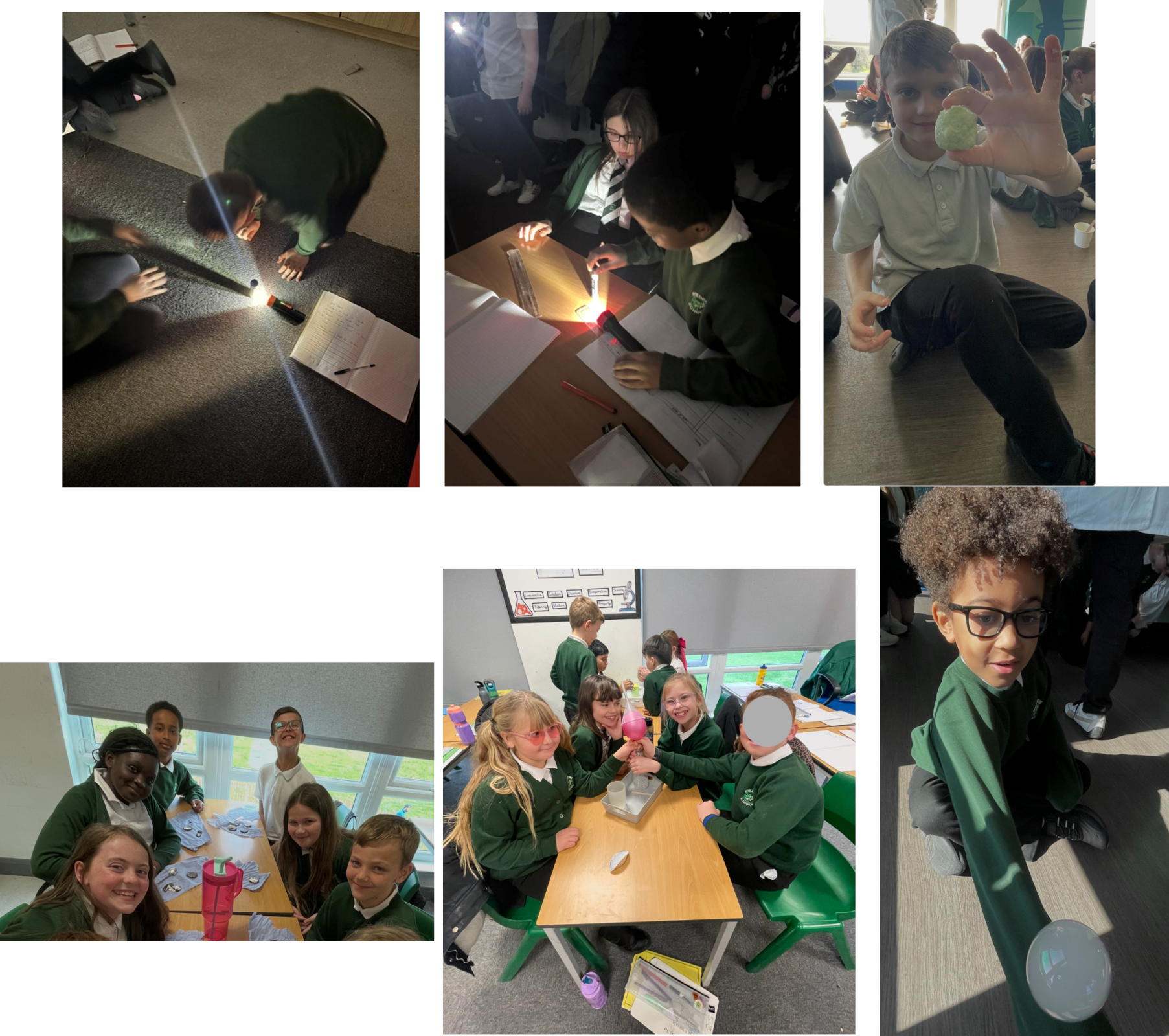
How we teach Science: At Ryedene, Science is taught through a carefully sequenced curriculum which supports teachers to deliver the National Curriculum and develop pupils’ knowledge and understanding over time. Teachers use key documents to support planning and delivery, including knowledge organisers, prior learning links, skills progression, a Long-Term Plan and Medium-Term Plans, ensuring a clear sequence of learning. Planning identifies key knowledge, vocabulary and learning outcomes, alongside opportunities for questioning, retrieval and practical investigation, supporting children to remember and apply what they have learned. Lessons provide opportunities for pupils to work scientifically by asking questions, making predictions, observing and measuring, carrying out investigations, recording results, interpreting findings and drawing conclusions from evidence. This approach ensures a consistent and ambitious Science curriculum, enabling all pupils to develop the knowledge, skills and confidence to understand the world around them.
Impact – what the children have learnt: Children at Ryedene enjoy a broad and engaging Science curriculum and have opportunities to develop their knowledge, understanding and scientific enquiry skills. Through practical and inclusive Science lessons, all children are encouraged to develop their curiosity, confidence and understanding of the world around them. They develop an appreciation of how Science helps us to explain what is occurring, predict how things will behave and understand causes. By the end of each key stage, pupils are expected to know, apply and understand the knowledge, skills and processes outlined in the National Curriculum across biology, chemistry and physics. Evidence of learning is gathered through careful assessment, questioning, observations and children's work, enabling teachers to monitor progression and identify the knowledge and skills pupils have developed throughout their Science journey.