History at Ryedene
"We are historians”
Subject Leader: Mrs Boenke
My name is Mrs Boenke and I am subject lead for History. From a young age, I have found the subject fascinating and I'm passionate about bringing the past to life for our children. I love helping pupils discover how people, places and events from history have shaped the world we live in today. My aim is to inspire curiosity, encourage thoughtful questions and make history an exciting subject that every child can enjoy. I am the Essex Schools Lead for the Local History Hub, who works alongside English Heritage to bring local history to schools. This is a venture I am particularly excited about as our local area has a rich history to explore!
Vision: At Ryedene, we want every child to develop a love of history and a curiosity about the people, events and civilisations that have shaped Britain and the wider world. We inspire our children to ask questions, think critically and develop a secure understanding of the past so they can make sense of the present and their place within it. Through studying significant people, events and societies across different periods of history, children build a secure chronological understanding while exploring how and why change happens over time. We want our pupils to think and work as historians through investigating evidence, considering different interpretations and developing balanced judgements about the past. Through the study of local, national and global history, children learn that history is shaped by different people, perspectives and experiences. As children progress through Ryedene, they revisit important historical concepts and make meaningful connections between periods of time, enabling them to deepen their understanding and remember more. We aim for every child to leave Ryedene as a curious, knowledgeable and reflective historian, equipped with the confidence to question, analyse and appreciate how the past continues to influence the world today.
What we are teaching in history: Our history curriculum is carefully planned to help pupils develop both historical knowledge and the skills needed to think like historians. As they progress through the school, children learn to investigate how and why the past has changed, identify patterns and connections across different periods, compare experiences and societies, evaluate the importance of people and events, consider different perspectives on the past, and ask perceptive questions, think critically, weigh evidence, consider different interpretations and reach informed conclusions. Learning is organised chronologically so that pupils build a secure understanding of the passage of time and how periods of history are interconnected. Within this chronological framework, children revisit key themes such as leadership and authority, conflict and conquest, movement of people, the growth and decline of societies, belief systems, trade and exchange, innovation and achievement, and the ways people lived. Revisiting these themes across different historical contexts enables pupils to build increasingly sophisticated knowledge, make meaningful links, and develop a deeper understanding of the past.
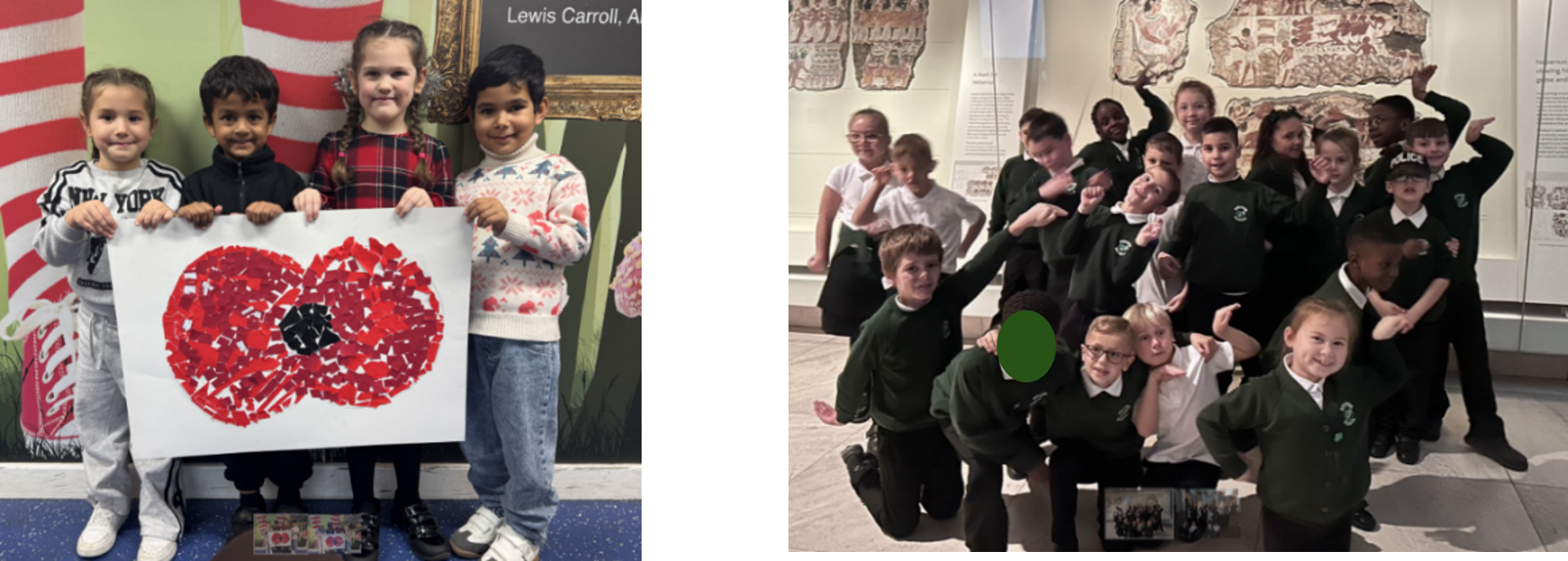
How we teach history: Our history curriculum is taught chronologically, enabling pupils to build on prior learning and develop a secure understanding of how the past has shaped the present. Each unit is centred around three enquiry questions that encourage children to investigate evidence, consider different viewpoints, and explore why events happened and why they matter. Lessons build on prior learning and carefully revisit important knowledge and concepts so that pupils remember more over time. Learning is enriched through educational visits, workshops, visitors and opportunities to explore local history, helping pupils make meaningful connections between the past and the world around them. Through discussion, debate, role play and extended writing, children develop their historical understanding while learning to communicate ideas, justify opinions and use evidence to support their thinking.
Impact – what the children have learnt: As a lead school for the Local History Hub initiative, we inspire children to see themselves as historians, encouraging them to think critically about the past and develop a broad historical perspective. Children understand how local history fits within regional, national and global contexts, recognising that events and people are interconnected across time and place. By the time pupils leave Ryedene, they have a secure chronological understanding of Britain's past and the wider world. They confidently use key historical concepts to explain change, evaluate evidence and consider different interpretations, leaving with a lasting curiosity about how the past continues to influence the present. Teachers assess pupils' historical knowledge and disciplinary understanding throughout each unit through discussion, questioning, written outcomes and enquiry tasks. This informs future learning and ensures pupils are building secure knowledge over time.