English at Ryedene
“We are Authors”
My name is Miss Short and I am the subject lead for English and Reading. I am truly passionate about my subject and believe it is one of the most important cornerstones of children’s learning. Through seeing themselves represented in books; having the agency to develop their own style of writing and finding confidence in their voice through oracy, I love seeing the children develop the skills to express themselves effectively. English gives our children the opportunity to connect with the world around them; explore new ideas; communicate in a way that feels comfortable to them; be creative and curious, all skills that will continue to support them throughout their lives no matter the journey they choose to take.
Vision: The vision for English at Ryedene, is for every child to develop a love of language and the confidence to read, write and communicate effectively. Through a rich and varied range of texts, genres and authors, we encourage children to become fluent and confident readers, develop their vocabulary and express their ideas creatively and clearly. We value the importance of English in the social, cultural, spiritual, personal, emotional and intellectual progress of our children and feel strongly that mastery of language and communication allows children to function effectively and successfully within a literate society, as well as providing them with the means to develop a more imaginative and creative way of thinking and communicating.
What we are teaching in English: English at Ryedene is multi-facetted and progresses through the skills listed in the National Curriculum, promoting high standards of language and literacy for all children to equip them with a strong command of the spoken and written word, and developing their love of literature through widespread reading for enjoyment. Our rich curriculum provides a wonderful opportunity for our children to engage with a range of genres, texts and authors and provides ample opportunity to discuss, debate, present and explain through writing and spoken language. English is taught ordinarily through high quality, diverse and engaging texts, with a piece of writing produced each week to suit a different purpose and audience, alongside a grammar focus, vocabulary acquisition, spellings knowledge, handwriting and comprehension of text. Unit plans are devised to ensure coverage of the required objectives, writing progression, engaging stimulus for the children and consistency throughout the key stages. For our children to develop positive attitudes towards reading, we have developed a culture of reading for pleasure and information throughout the curriculum. Using the national curriculum domains for reading, each teacher creates a weekly class reading lesson that showcases a variety of genres, text types and authors and gives the opportunity to practise both fluency and comprehension of the text. Alongside this, ‘Big Read’ lessons take place once a week with a slightly different focus and more opportunity for book talk and oral discussions around issues raised in the text, ensuring all the skills of language are taught, practised and mastered throughout their time at Ryedene.
How we teach English: If our children are to achieve greatness, we believe it is essential our staff have the necessary skills to develop them at every stage of their school life. In order to ensure consistency, I work alongside the class teachers to develop a bespoke English programme, not only suited to the objectives of the national curriculum but the needs of each cohort. We aim to develop teacher’s expertise to allow them to teach with confidence, ensuring they are supported and retain the autonomy to teach from texts that will engage and enthuse their cohort. Regular updates are provided, and training opportunities planned, to support and improve practice ensuring the highest quality of teaching for all children. Cross-curricular links are identified and utilised where possible to provide the children with every opportunity to be successful in their writing journey. We recognise the correlation of reading skills and future success and have ensured that Teachers have the skill and autonomy to be able to use the lessons to develop a particular skill, further knowledge of a new topic or motivate their cohort with exposures to new genres and authors. Comprehension skills are explored explicitly once a week in English lessons, where new texts each week provide purpose and motivation for writing.
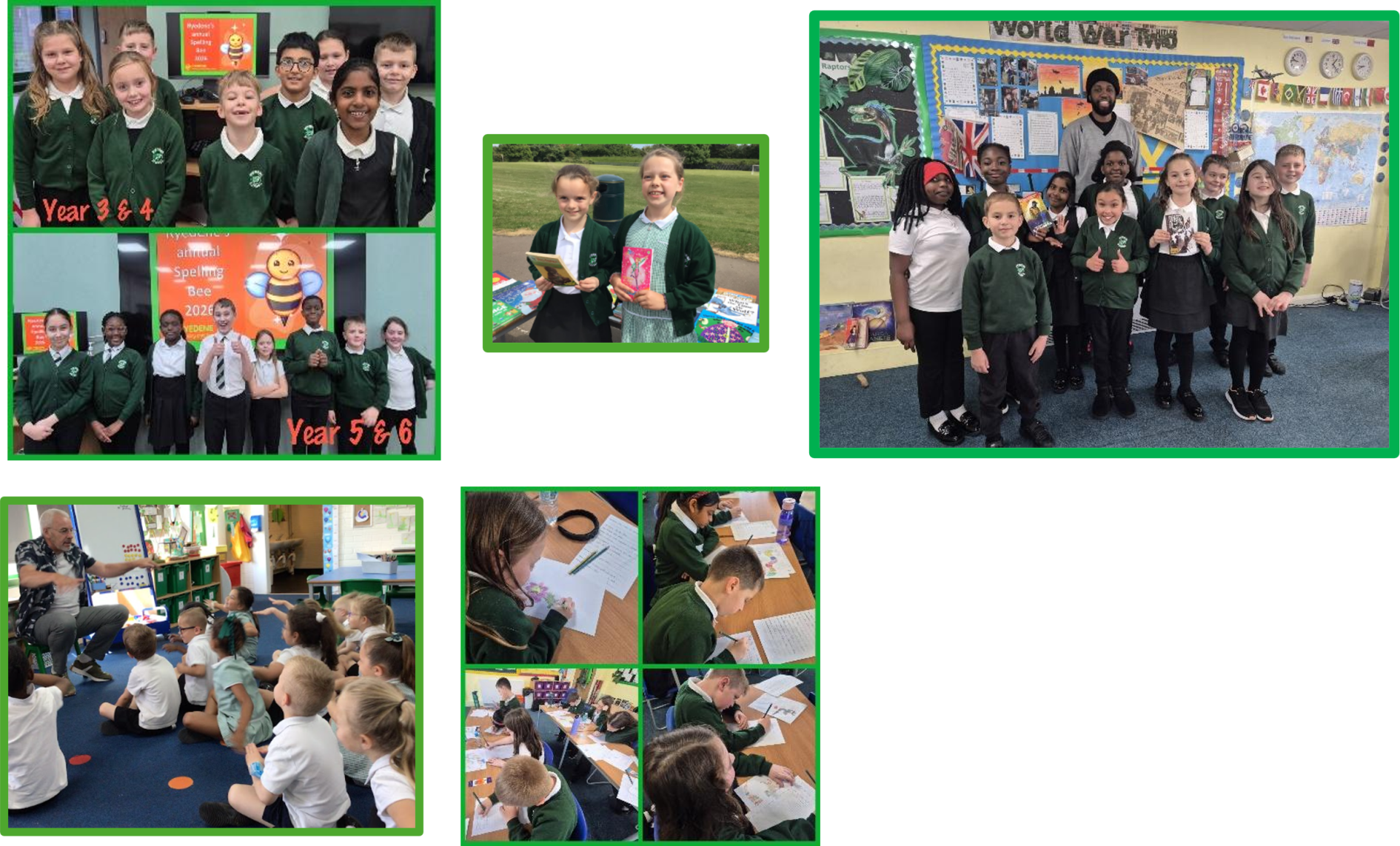
Impact – what the children have learnt: We pride ourselves on providing a range of engaging and motivational opportunities for our children to develop, practise and demonstrate the skills learnt in English, with purpose and confidence. These include, Lessons, Assemblies, Class Performances, Visits, Workshops, Competitions, Recitals, Debates, Work showcases, where all children are encouraged to take part and celebrate their learning journey.
Through our progression in Oracy skills, children have learnt to: speak audibly and fluently with an increasing command of Standard English; listen and respond appropriately; ask relevant questions to extend their understanding and knowledge; build their vocabulary; articulate and justify answers, arguments and opinions; structure their writing for a range of audiences and purposes; maintain attention and participate actively in collaborative conversations, staying on topic, initiating and responding; develop understanding through speculating, hypothesising, imagining and exploring ideas; participate in discussions, presentations, performances, role play, improvisations and debates; gain, maintain and monitor the interest of the listener(s); consider and evaluate different viewpoints, attending to and building on the contributions of others and select and use appropriate registers for effective communication.
Through our progression in Handwriting Spelling and Grammar, children age-appropriate Develop letter, number and symbol formation, developing their handwriting skills to ensure neat, legible cursive writing; learn the statutory spelling lists from the NC alongside spelling patterns and word recognition, vocabulary interrogation, the morphology, orthography and etymology of words; take part in explicit age appropriate grammar lessons which follow the NC expectations and use speaking and writing opportunities to develop an explicit knowledge of grammatical terms and conventions to allow for choice and manipulation of language.
Through our progression in writing, children have learnt to: Reconise a range of text types, genres and writing styles; consider audience and purpose when writing, choose structure and layout carefully to account for genre and text type, use their skills of transcription to produce legible, fluent and engaging pieces of writing; practise and develop grammar and punctuation skills learnt in previous years and put themselves in the position of author to develop their own creative flair and authorial tone, promoting individuality and agency.
Through our progression in reading, children have learnt to: Use their phonetical knowledge to segment, decode, blend and pronounce unusual and unfamiliar words; recognise, understand and use familiar and ambitious vocabulary; read fluently and accurately; use their linguistic knowledge to develop their comprehension skills; use a diverse and varied selection of texts to develop their knowledge of a variety of non-fiction subjects as well as develop their knowledge of the wider world; enjoy reading for pleasure as a means to not only develop knowledge, but allow an escape, a way to develop their imagination, a sense of wonder and as a form of connection and belonging.